Introduction
More parents across India are rethinking their children’s education. With growing awareness about global career opportunities, universities abroad, and skill-based hiring, many families are now exploring international schools as an alternative to conventional schooling. But what exactly sets an international school apart? And is the change worth it for your child? If you’re researching school admissions and wondering whether a Cambridge international school might be the right fit, this article will help you understand the key differences — clearly and honestly.
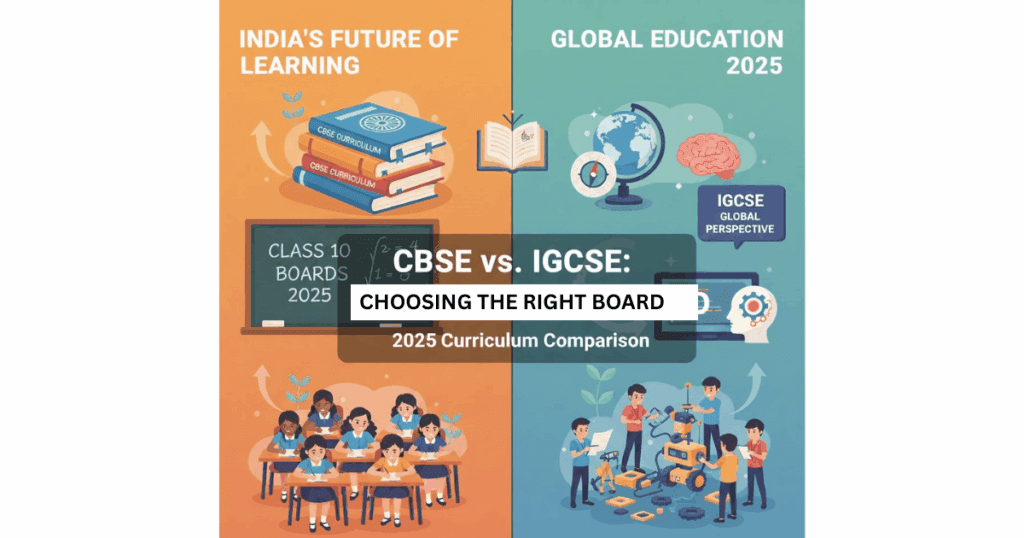
What Is an International School?
An international school follows a globally recognised curriculum — such as the Cambridge International Curriculum — that is accepted by universities and institutions worldwide. It emphasises critical thinking, inquiry-based learning, and holistic development, preparing students for higher education and careers both in India and abroad.
International School vs Traditional School: Key Differences
The most straightforward way to understand the distinction is through a side-by-side comparison:
| Aspect | International School | Traditional School |
| Curriculum | Cambridge International (global) | State Board / CBSE / ICSE |
| Teaching Approach | Inquiry-based, student-led learning | Teacher-led, textbook-focused |
| Assessment Style | Project work, portfolios, exams | Primarily written exams |
| Critical Thinking | Core focus across all subjects | Limited structured emphasis |
| Global Exposure | International perspectives built in | Primarily local context |
| Subject Choices | Wide, flexible subject selection | Fixed subject combinations |
| University Preparation | Recognised worldwide by universities | Mainly India-focused pathways |
What sets an international school apart from a traditional school?
International schools follow globally accredited curricula like Cambridge, focus on inquiry-based and skill-driven learning, and use diverse assessment methods beyond written exams. Traditional schools in India primarily follow CBSE or state boards, with greater emphasis on rote learning and standardised testing.
Why Parents Choose International Schools
Parents who opt for an international curriculum are often looking beyond marks and memorisation. Here is what typically draws families to this path:
1. Skill-Based Learning
The Cambridge curriculum — from Cambridge Primary through to AS & A Levels — is designed around building transferable skills: problem-solving, research, analysis, and creative thinking. These are the very skills employers and universities look for, regardless of which country a student ends up in.
2. A Genuine Global Perspective
Students in an international school explore topics through multiple cultural and global lenses. Exposure to diverse cultures and perspectives encourages students to become adaptable, globally aware individuals who can thrive in a connected world.
3. Inquiry-Based Learning
Rather than simply memorising content, students are encouraged to ask questions, investigate ideas, and draw their own conclusions. This approach builds intellectual curiosity and confidence — habits of mind that last well beyond the classroom.
4. Communication and Leadership Skills
Classroom discussions, collaborative projects, and presentations are a regular part of international school life. Students learn to express ideas clearly, work in teams, and take initiative — skills that complement academic achievement.
5. University Readiness
Qualifications like IGCSE and A Levels are recognised by universities in over 160 countries. Whether a student wishes to study medicine in India, engineering in the UK, or business in the US, an international curriculum provides a strong foundation. Many schools, including BVRTSE, offer structured guidance on university applications as part of the student journey.
Is an International Education the Right Fit for Your Child?
Yes. The Cambridge curriculum is fully compatible with Indian students’ academic ambitions. Cambridge qualifications are accepted by Indian universities and professional entrance pathways, while also opening doors to international higher education. Many Cambridge schools in India, including in Pune, follow this pathway from early years to Grade 12.
Every child is different, and choosing a school is a deeply personal decision. Here are some practical considerations to reflect on:
- Does your child thrive when given the freedom to ask questions and explore?
- Are you considering higher education options both within India and abroad?
- Do you value assessment that goes beyond a single annual exam?
- Is developing confidence, communication, and leadership important to you alongside academics?
- Are you looking for a school with a clear, structured pathway from the early years through to Grade 12?
If most of your answers are yes, an international school — particularly one offering the full Cambridge Pathway — is likely worth a closer look. Schools such as BVRTSE in Balewadi, Pune, provide a complete Cambridge learning pathway—from Playgroup and Cambridge Primary to IGCSE and AS & A Levels—allowing students to progress seamlessly through their academic journey. Consistent, globally recognised learning journey right through to Grade 12.
It is also worth visiting schools in person, speaking with teachers, and understanding the admission process before making a decision. A supportive learning environment is just as important as the curriculum itself.
Conclusion
The difference between an international school and a traditional school goes beyond curriculum names. It reflects a different philosophy of education — one that prioritises thinking over memorising, skills over scores, and global readiness over local benchmarks alone.
For parents in Pune exploring international schools, the key is to find a school where the values, teaching approach, and student support align with what you want for your child. A Cambridge international school can offer a structured, globally respected pathway — but the best school is ultimately the one where your child will grow, feel supported, and develop a genuine love of learning.